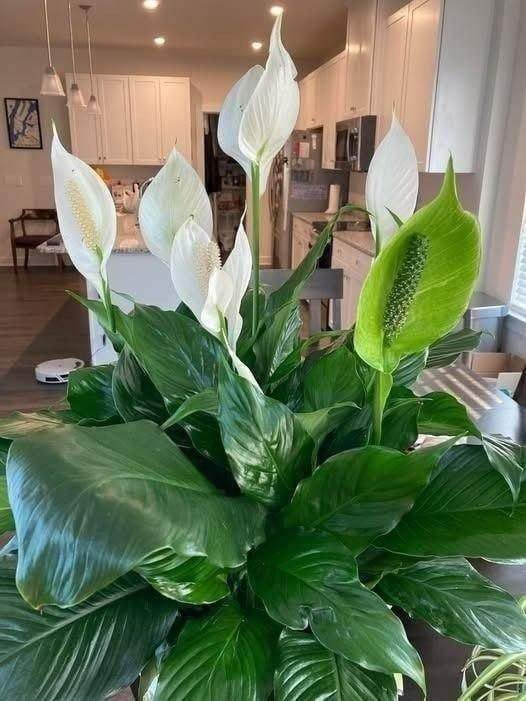
eace lilies (Spathiphyllum) are among the most beloved flowering houseplants for good reason. With their elegant white spathes (often mistaken for flowers) rising above lush, dark green foliage, they bring a touch of serenity and sophistication to any indoor space. Unlike many common houseplants that never bloom indoors, peace lilies—and orchids—are prized precisely because they do flower, offering that rare and uplifting floral presence in our homes.
But what happens when your peace lily stays stubbornly leafy, producing only tiny blooms—or worse, none at all?
It’s a familiar frustration. You water it, you place it near a window, you even talk to it—but still, no flowers. While factors like light levels, watering habits, and humidity certainly play a role, plant experts say there’s one often-overlooked key to unlocking consistent, abundant blooms: what you’re not feeding your plant.
And the solution might already be in your kitchen.Kitchen supplies
The Hidden Reason Behind Poor Blooming
Many peace lily owners assume that if the plant is alive and growing leaves, it’s thriving. But flowering is a different story. Blooming requires extra energy and specific nutrients—particularly phosphorus, which is essential for flower development. Without it, the plant may stay healthy but remain in “survival mode,” prioritizing leaf growth over reproduction.
Common culprits for lack of blooms include:
Too little light: Peace lilies need bright, indirect light to trigger flowering (though they tolerate low light for survival).
Overwatering or underwatering: Both stress the plant and divert energy from blooming.
Low humidity: Dry air can hinder overall vitality.
Being root-bound: While slight root confinement can encourage blooming, extreme crowding stunts growth.
Yet even when these conditions are optimized, many plants still underperform. That’s where nutrition comes in—and not just any fertilizer.
The Kitchen Secret: Rice Water as a Natural Bloom Booster
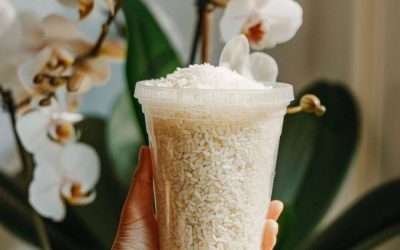
According to horticultural expert Thomas, the missing piece might be as simple as rice water—the starchy liquid left over after rinsing or cooking rice. Far from being waste, this humble byproduct is packed with natural goodness that can gently nourish your peace lily and support flowering.
“Rice water is great for adding nitrogen, phosphorus, and potassium—the core N-P-K nutrients plants need,” Thomas explains. “But it also contains beneficial sugars, amino acids, and trace minerals that feed soil microbes, creating a healthier root environment.”
Different types of rice—white, brown, jasmine, or basmati—offer slightly varying nutrient profiles, but any type works. The starches break down into simple sugars that feed beneficial bacteria in the soil, which in turn help the plant absorb phosphorus more efficiently—the very nutrient that fuels flower production.
How to Use Rice Water for Your Peace Lily
see continuation on next page