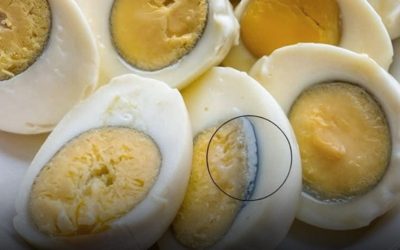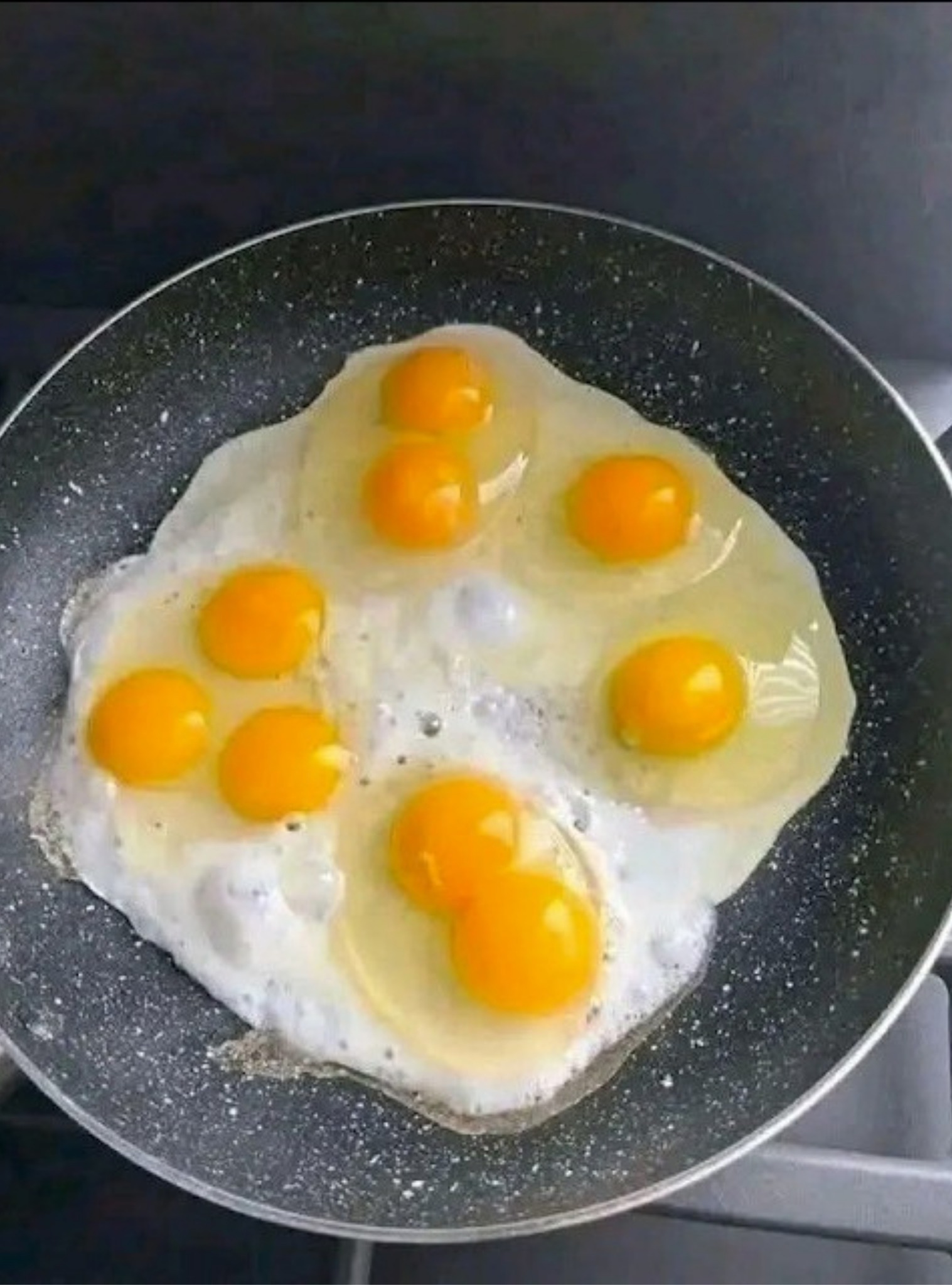
This is where perception comes into play. When multiple eggs are close together, overlapping whites and tightly spaced yolks can blur visual boundaries. The brain fills in gaps, grouping shapes instinctively rather than counting carefully. What seems obvious at first may shift once you slow down and examine each edge, each curve, each distinct yolk.
The image becomes less about food and more about attention. Do you trust your first impression, or do you pause and look again? Much like visual puzzles, the answer depends on whether you rely on intuition or observation.
Only at the end does the real challenge reveal itself: the question isn’t about eggs at all, but about perception—because most people miscount how many eggs are actually in the pan until they take the time to look closely and count them one by one.