3. Instructions
-
Brown the Meat: In a large, deep skillet or Dutch oven, brown the ground beef over medium-high heat. Drain any excess grease.
-
Sauté Aromatics: Add the diced onion to the pan and cook until softened. Stir in the minced garlic and tomato paste, cooking for another 1-2 minutes until fragrant.
-
Combine: Pour in the crushed tomatoes and beef broth. Season with salt, pepper, and Italian seasoning. Bring the mixture to a gentle boil.
-
Cook Pasta: Break the spaghetti in half (optional) and add it to the skillet. Ensure the noodles are mostly submerged in the liquid.
-
Simmer: Reduce heat to medium-low, cover, and simmer for 10-12 minutes, stirring occasionally to prevent the pasta from sticking. Cook until the pasta is tender and most of the liquid has been absorbed into a thick sauce.
-
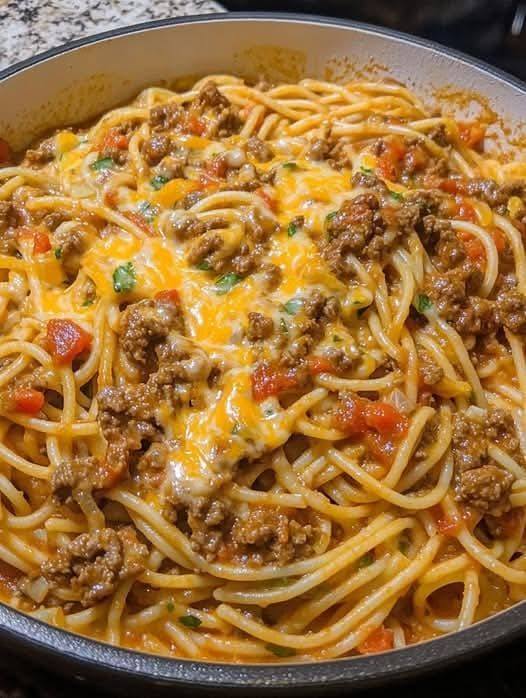
Add Cheese: Sprinkle the shredded cheese evenly over the top. Cover for another 2 minutes, or until the cheese is completely melted and bubbly.
-
Serve: Garnish with fresh herbs and serve hot directly from the pan.
4. Variations
-
Veggie Boost: Stir in chopped bell peppers or fresh spinach during the simmering stage for extra color and nutrients.
-
Spicy Kick: Add a teaspoon of red chili flakes or use “Rotel” style tomatoes with green chilies to give the sauce more heat.
-
Creamy Version: Stir in 1/4 cup of heavy cream or a dollop of cream cheese just before adding the shredded cheese for a silkier texture.
5. Serving and Storage
-
Serving: This hearty dish is a meal in itself but pairs perfectly with a crisp side salad or warm garlic bread.
-
Storage: Store leftovers in an airtight container in the refrigerator for up to 3 days.
-
Reheating: Reheat on the stove over low heat with a splash of water or broth to loosen the sauce, or use a microwave.
6. Benefits
-
Time Efficient: Reduces preparation and cleanup time by using only one cooking vessel.
-
Flavor-Packed: Cooking pasta in sauce rather than water results in a much deeper flavor profile in every bite.
-
Protein-Rich: Provides a substantial amount of protein from the ground beef, making it a very satiating meal.
7. History of One-Pot Pasta Dishes
The concept of “One-Pot Pasta” has transformed from a practical necessity to a global culinary trend. Historically, cooking pasta and sauce together was common in southern Italian rural traditions, known as pasta e fagioli or pasta e patate, where resources like water and fuel were conserved. However, the modern “One-Pot Pasta” phenomenon gained massive international popularity in the early 2010s, largely attributed to a recipe popularized by Martha Stewart’s kitchens, which was inspired by a technique observed in a small restaurant in Puglia, Italy.
While traditional Italian culinary rules often insist on boiling pasta in large amounts of heavily salted water, the one-pot method challenges this by utilizing the starch released from the pasta to naturally thicken the sauce, creating a cohesive, velvety texture.
The “Cheesy Beef Spaghetti” variation is an Americanized evolution of this technique. It blends the structural simplicity of Italian one-pot cooking with the flavors of “American Goulash” or “Chili Mac.” The addition of melted cheddar cheese—a staple of mid-century American “casserole culture”—adds a layer of decadence that moved the dish from a simple peasant meal to a modern comfort food icon. Today, it stands as a testament to the “Efficiency Movement” in home cooking, proving that home-cooked family meals can be both gourmet in flavor and practical in execution.